Media Interview | Hubbis: Centaline Family Office: Impact, Resilience and the Continuity of Greatness
May 7, 2026
As Hong Kong’s family office sector transitions from emerging concept to competitive marketplace, newer entrants face a sharpening challenge: differentiating in a field where investment capabilities alone are no longer sufficient. For Kelly But, Founding Partner and General Manager of Centaline Family Office, the firm’s proposition extends well beyond portfolio management, centring instead on what she describes as the continuity of greatness, guiding wealthy families through the intersection of legacy planning, philanthropy and intergenerational transition.
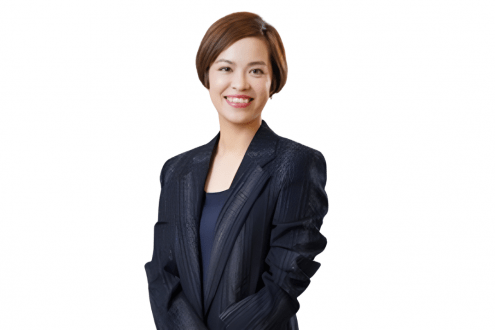
Two years ago, when Centaline Family Office was established, the concept of family offices in Hong Kong was still relatively unfamiliar. Kelly recalls that early client conversations required extensive education, explaining what external asset managers (EAMs), single family offices (SFOs) and multi-family offices (MFOs) were, before even introducing the firm’s own proposition. That dynamic has shifted considerably. Government promotion, growing media attention and the entry of new market participants have raised awareness significantly, to the point where most prospective clients now arrive with a working understanding of the landscape.
This increased awareness, however, has brought its own complications. The same trend that validated the opportunity has also attracted competition, making recruitment harder and client acquisition more contested. Kelly notes that conversations with prospective clients have evolved from introductory to comparative: rather than asking what a family office does, clients now ask what distinguishes one from another. For a firm that is neither the newest entrant nor a long-established incumbent, articulating that differentiation has become a central strategic priority.
A Client Base Shaped by Sophistication and Legacy Thinking
Centaline Family Office’s client profile has been shaped, somewhat counterintuitively, by the firm’s relative youth. Kelly observes that the clients who chose to onboard with a new platform were not those unfamiliar with wealth management, quite the opposite. They were sophisticated individuals with extensive private banking experience who were actively seeking alternatives to established providers. The novelty of the firm, rather than being a deterrent, attracted clients willing to explore a different approach.
These clients understand diversification not merely as a concept but as an operational requirement, seeking balanced allocations across equities, fixed income, alternatives, pre-IPO (initial public offering) opportunities and, increasingly, insurance products. Kelly describes their approach as deliberately even-handed across asset classes, with a preference for smaller initial allocations to unfamiliar strategies before committing further.
More notably, the emphasis has shifted from return-centric to legacy-centric thinking. Rather than chasing headline returns, clients are focused on how their portfolios fit within broader family governance frameworks. Kelly frames this as a fundamental evolution in client expectations, one that aligns directly with the firm’s own positioning around impact, resilience and family legacy. “I believe wealth is a tool, and legacy is the story that remains,” she says.
Differentiation Through Heritage, Expertise and Personal Experience
In a market where investment capabilities have become relatively commoditised, Centaline Family Office draws its differentiation from three interconnected sources: its parentage, its team composition and its founding philosophy.
The firm operates under the umbrella of the Centaline Group, one of Hong Kong’s most recognised real estate brands. This affiliation provides access to property-related resources, market intelligence and a network that Kelly believes no other MFO or EAM in the market can replicate. For clients with significant real estate holdings, a cornerstone of Asian family wealth, this connection offers a tangible advantage that extends beyond conventional investment advisory.
The founding team brings complementary expertise. Co-founder Larry leads the investment function alongside Patrick, while Kelly herself is oriented towards the broader advisory mandate: community building, impact investing, philanthropy and family legacy planning. This division of responsibilities allows the firm to operate as a one-stop platform spanning investment management, property advisory, wealth structuring and values-driven planning.
It is Kelly’s personal trajectory, however, that she positions as the firm’s most distinctive characteristic. Her career began within professional firms and her own family business, where she gained first-hand experience of the internal complexities and weight of heritage that accompany multigenerational wealth. Having established her own independent practice in her late thirties, she gained a dual perspective from this transition: understanding what it takes to honour a family’s past while building a future for the next generation.
“As a mother, I live the daily tension between building a fortune and raising a future,” she explains, framing this lived experience as central to her ability to guide families through what she calls the delicate journey of lasting continuity.
Serving the Second Generation
Centaline Family Office has deliberately oriented itself towards serving second-generation wealth holders, individuals typically in their thirties and forties who are assuming responsibility for family businesses and family wealth from founders now in their sixties and seventies. Kelly argues that this generational transition represents both a structural trend and a defining opportunity.
Much of Asia’s private wealth was created during the 1980s and 1990s, and the founders of those enterprises are now reaching the stage where succession is no longer theoretical. Their children face a complex set of challenges: inheriting businesses and portfolios they may not have built, navigating governance structures that may not yet exist, and developing their own identities alongside inherited obligations.
This cohort is not simply looking for investment management. They want help articulating their own values, contributing to society in ways that may differ from their parents’ approach, and building governance frameworks that will sustain family wealth across generations. The firm’s advisory model is designed to address these needs, with Kelly and her co-founders sharing the same demographic cohort and cultural reference points as many of their clients, a peer-level dynamic she believes creates a different quality of engagement compared to traditional private banking relationships.
Technology as a Back-Office Enabler
On technology and artificial intelligence, Kelly takes a pragmatic view. The firm uses AI primarily in middle-office and investment functions, supporting research analysis, information gathering and administrative tasks. On the investment side, tools that help generate ideas and synthesise research reports have proven valuable.
However, Kelly sees limited near-term application for AI in client-facing interactions. Given the firm’s client profile, sophisticated, relationship-oriented individuals who value personal engagement, she does not anticipate technology replacing the human advisory interface. The personal touch, she argues, remains fundamental to how the firm’s clients prefer to be served.
Priorities: Philanthropic Impact and Thought Leadership on Continuity
In its second year of operations, Centaline Family Office’s priorities extend beyond early establishment milestones, following extraordinary momentum in its asset base. Two pillars define the firm’s strategic focus over the next 12 to 18 months.
The first is catalysing philanthropic impact. Kelly is actively expanding the scope of guidance the firm provides around strategic philanthropy, with the goal of helping families transition from passive giving to active impact, aligning social contributions with core family values. “We want to be the architects who transform family wealth into a recognisable force for good,” she says.
The second pillar is thought leadership on continuity. Kelly frames this around one question: how do you build a fortune without losing the family? The firm is launching initiatives that address this challenge directly, drawing on her perspective as both an independent professional and a parent. The objective is to ensure that client families’ legacies are as resilient as their financial portfolios. This approach positions Centaline Family Office not only as an investment platform but as a vital partner in the broader architecture of multigenerational wealth.
Source: Hubbis